
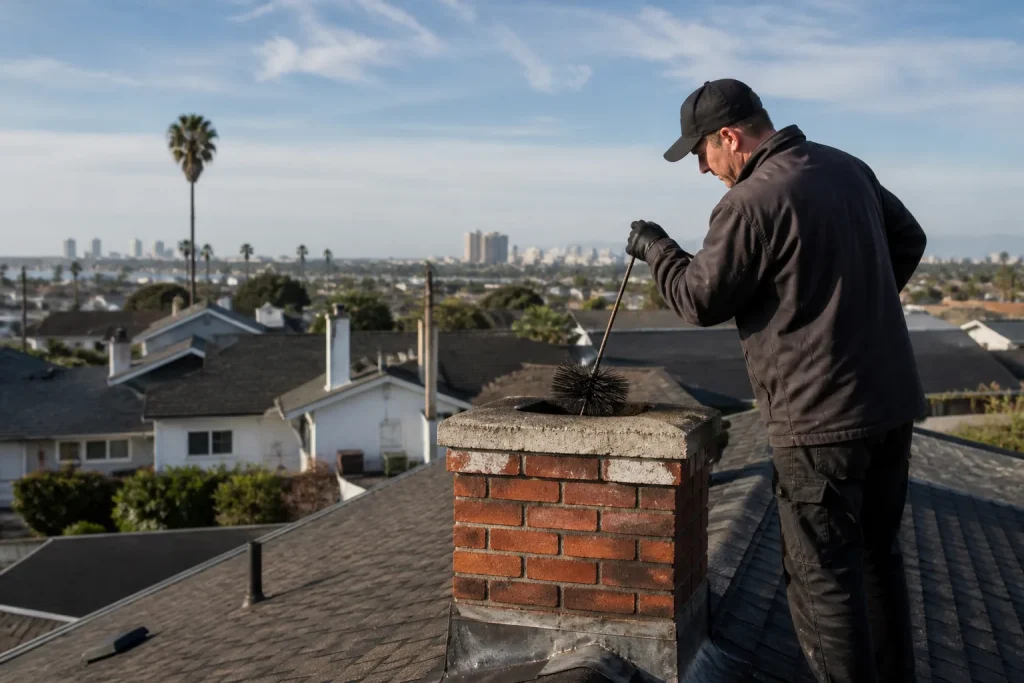
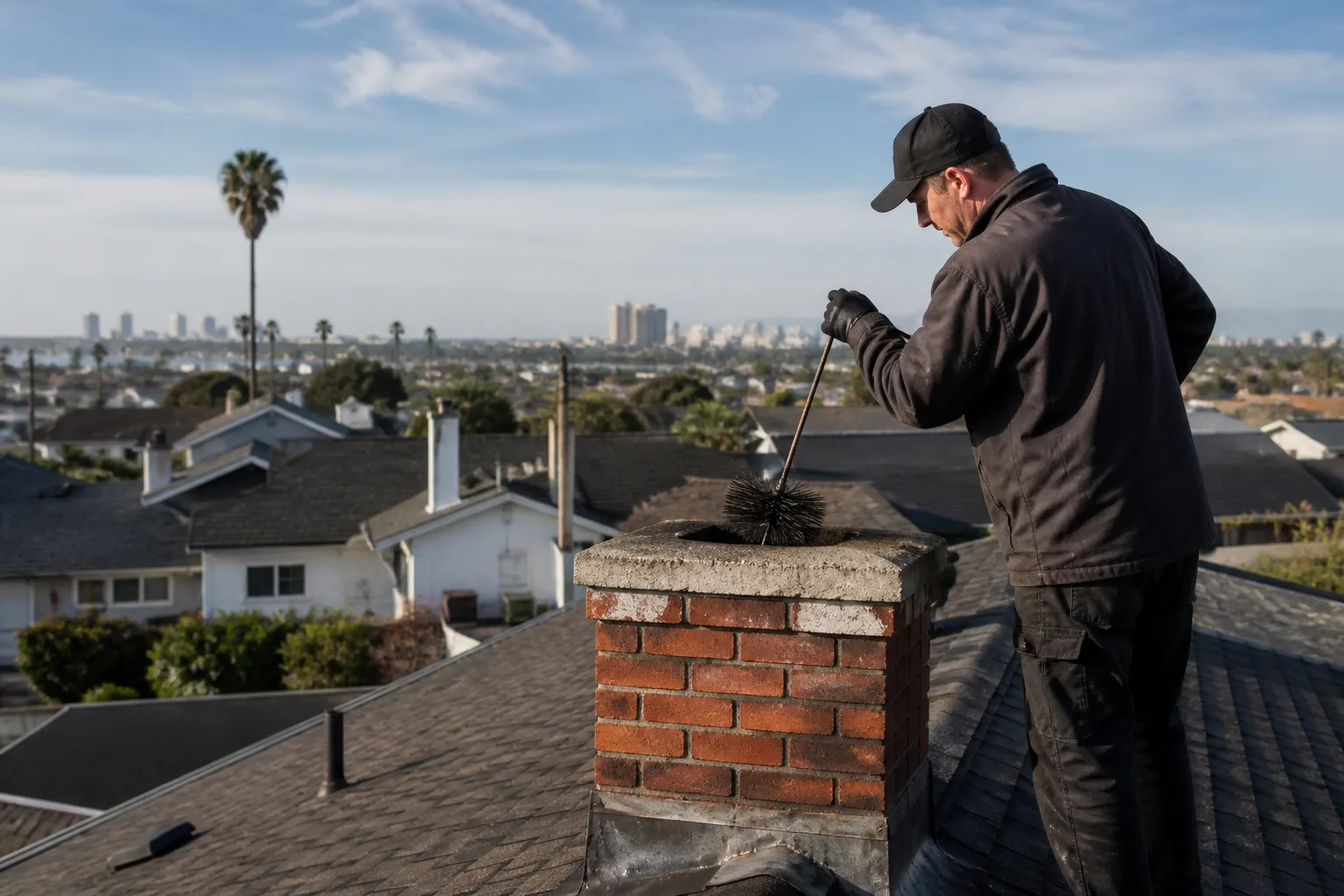
Chimney Sweep: Repair or Replace? How Costa Mesa Homeowners Decide
If a chimney company recommends replacement on the first visit, before a camera inspection report is in your hands, they’re working from assumption. In Costa Mesa, where prefab systems are common and masonry chimneys vary widely by age and condition, that assumption has a real chance of being wrong in both directions. The repair-or-replace decision isn’t mainly about age. It’s about the specific failure, how expensive that failure gets over time, and how much sound structure is left around it. Those are three things you can verify, not opinions you have to take on faith. If you’d rather have a trained eye confirm what’s actually going on inside the flue, call (877) 792-5891.
What Data Should Come Before Any Repair-or-Replace Recommendation?
Three objective data points should exist before anyone tells you to repair or replace:
- A completed Level 2 video inspection with footage you can watch. A camera scan through the flue shows cracks, gaps, displaced tiles, and joint failures that no amount of headlamp squinting from the firebox can reveal. You should see the footage, not just hear a summary of it.
- A written condition report with specific failure locations. “Your chimney needs work” is not a report. A real one names the flue, the height, the component, and the condition at that spot.
- A materials assessment. If a prefab system’s components are discontinued by the manufacturer, a component-level repair may not be possible at all. That’s a materials question, not a labor question, and it should be answered before pricing.
We name the brands we use – DuraFlex liners, HeatShield resurfacing, Copperfield components – because once the report identifies the failure, the fix becomes a materials conversation rather than a sales pitch. An inspection that comes with repair capability on the same visit is the standard to hold any chimney company to in Costa Mesa. If the person diagnosing can’t fix it, the diagnosis is worth a second look.
What Does Repair Look Like, Component by Component?
Repair isn’t one thing. It’s at least three different jobs with different costs and different lifespans afterward.
- Liner repair. For a masonry flue with cracked but intact tiles, HeatShield resurfacing restores the flue from the inside without demolition. A stainless insert with DuraFlex components handles more extensive damage. Both are repairs short of a rebuild, and both come with rated service life after installation that the manufacturer documents.
- Firebox rebuilds. Refractory panel replacement addresses cracked prefab firebox panels. Full firebox reconstruction handles mortar joints that have failed structurally. The difference is whether the panels are the failure or the masonry around them is.
- Crown and chase cover replacement. A cracked masonry crown or a rusted chase cover lets water into the structure. Gelco, Olympia, and Famco crown systems are matched to the specific chimney configuration rather than fitted generically. This is water intrusion solved at the source, not just cleaned around.
Expect a resurfacing job to land in the low-to-mid four figures and a full stainless reline to run higher. Both are priced per job by a written estimate, and both outlast any repair that only addresses the symptom.
When Is Replacement Actually the Answer for a Prefab System?
Prefab chimneys are engineered systems with rated service lives. Replacement is legitimate in three specific situations:
- The air-cooled flue jacket has compromised welds. The outer jacket is part of the safety envelope. Welds that have failed or separated mean the system’s cooling design is no longer functioning as engineered.
- UL-listed replacement components are discontinued. A prefab system depends on manufacturer-matched parts. When those parts are no longer available, a component repair isn’t a repair – it’s a modification, and not one we’d stand behind.
- The system has exceeded its rated service life and already has multiple prior repairs. A third repair on a system past its rated life is money moving in the wrong direction. The trajectory of those costs matters more than the age number itself.
Outside those three, replacement recommendations for prefab systems deserve a hard look. If you’re in Costa Mesa and the recommendation arrives without documentation of any of the above, ask for the specifics in writing before you authorize anything.
How Do You Decide on a Masonry Chimney?
Masonry gives you more options, and the decision runs through the flue tile condition. A cracked flue tile is not an automatic reline recommendation. Three conditions carry three different risk profiles:
- Hairline cracks. Surface fractures that haven’t displaced the tile. These may be resurfaced rather than relined, depending on location and count.
- Displaced tiles. Tiles that have shifted out of alignment leave gaps at the joints. Combustion gases can reach the surrounding masonry, which is a real concern and usually calls for relining.
- Collapsed tiles. Structural failure of the flue itself. Relining or rebuild territory, not a resurfacing candidate.
You should know which of these three conditions you have before you approve anything. Ask to see the footage with the location identified. Ask which standard – NFPA 211, ICC – makes the repair non-compliant if the technician says it is. Those references exist for a reason, and a technician who’s done the work will know the answer without hesitation. A second opinion from a CSIA-certified inspector before authorizing major work is never a bad idea. If you’re evaluating a chimney repair recommendation and want a documented second look, we can provide one.
What Else Should You Check Before You Sign Off?
Pressure-testing a replacement recommendation takes about ten minutes of questions:
- Show me the failure on the camera footage, at the location your report names.
- Tell me which specific code or standard reference makes the repair non-compliant.
- Tell me whether the failed components are still manufactured and available.
- Give me the written estimate with the failure location and the repair scope matched up.
If those answers come easily and match the documentation, you’re talking to a technician who did the work. If they don’t, get another set of eyes. Whether you have a prefab chase or a masonry chimney in Costa Mesa, whether you’re sorting out a fireplace repair or deciding whether a full replacement makes sense, the framework is the same: evidence first, recommendation second. Nothing gets recommended here without camera evidence you can see for yourself, and we’ll tell you plainly when work can safely wait.
Related services in Costa Mesa: chimney sweep and inspection, cap and crown installation, and liner work.
The Bottom Line
Repair versus replace is a data question, not an age question. Get a Level 2 video inspection with footage, a written report naming each failure, and a materials assessment. Then decide. A prefab system is a replacement candidate when its jacket welds have failed, its parts are discontinued, or it’s past rated life with repeated repairs behind it. A masonry chimney is a repair candidate more often than it’s presented as one – hairline, displaced, and collapsed tile are three different problems, and relocation matters more than the crack count.
We handle the sweep, spot the problem, and fix it – no referrals, no second appointment. If you’re in Costa Mesa and need a straight read on what your chimney actually needs, Costa Mesa Chimney Sweep Pros offers free estimates – call (877) 792-5891. We answer 24/7, with fast dispatch from 7am to 7pm, Sunday through Friday. Written estimates are free, and our technicians have up to 8 years of experience.
Frequently Asked Questions
A properly executed repair lasts for the documented service life of the materials used. HeatShield resurfacing and stainless liner systems with DuraFlex components carry manufacturer-rated lifespans that the estimate should state in writing. A repair that only addresses the visible symptom – caulking over a crack, for example – won’t last, which is why the inspection report has to name the failure before the fix is chosen.
Most liner and crown repairs are completed in a day. HeatShield resurfacing and stainless relines are typically done in a single visit, with cure times that depend on the method. Full firebox reconstructions and prefab replacements take longer and are scheduled in stages. The written estimate specifies the expected timeline for your specific job.
Capping a chimney without addressing the interior failure leaves the same problems inside: water intrusion through a failed crown, flue deterioration, and corrosion on the cap and chase cover. Stopping fireplace use doesn’t stop the chimney from weathering. A full evaluation is still worth doing, even if the plan is to stop using the fireplace, because the chimney is still a water and structural element on the roof. We carry multiple professional-grade cap and crown lines – Gelco, Olympia, Famco, Copperfield – to match your chimney’s configuration rather than fitting something generic.
Ask for three things: the camera footage showing the failure, the specific code or standard reference (NFPA 211, ICC) that makes repair non-compliant, and confirmation that the failed components are still available from the manufacturer. Then get a second opinion from a CSIA-certified inspector before authorizing major work. A legitimate recommendation survives all of that scrutiny without much trouble.
Written by the team at Costa Mesa Chimney Sweep Pros.
Need Chimney Cleaning Help?
Call Costa Mesa Chimney Sweep Pros - the local pro we connect you with is licensed and insured, here with fast help in Costa Mesa.
(877) 792-5891