
Last updated November 25, 2026
 Sweep & inspection
 Caps & crowns
 Flue relining
 Masonry repair
 Gas fireplace service
Level 1 sweep and inspection to the NFPA 211 annual standard - flue, crown, cap, and flashing checked and photographed
Chimney sweep logs do not sweep chimneys. They loosen some creosote - which then falls where a brush and vacuum still have to collect it.
Chimney Cleaning Warning Signs: A Costa Mesa Homeowner’s Reference Guide
Most chimney problems announce themselves long before they turn dangerous. The trouble is that the early signals are quiet: a faint smell in a room with no fire, a chalky white stain on the outside brick, a flue tile that looks “just dirty” from the bottom of the firebox. A strong smoke smell in a room with no fire burning isn’t a draft quirk; it usually points to a cracked flue tile or failed smoke chamber mortar venting combustion gases into your living space, and that distinction matters a great deal. This guide names the specific indicators in plain technical language so you can tell normal residue from an urgent problem. We’ll cover the three stages of creosote, what efflorescence really means, how to read a flue tile, and the symptoms in Costa Mesa homes that get blamed on the HVAC system when the chimney is the actual source.
Quick Answer
The main chimney cleaning warning signs are a strong smoke or creosote odor when no fire is burning, dark or glazed buildup on the flue walls, white staining on exterior masonry, flaking flue tiles, smoke spilling into the room instead of going up, and a carbon monoxide detector that keeps tripping. Any one of these means the chimney needs a sweep or an inspection before you light another fire. In a mild climate like Costa Mesa’s, where fireplaces often sit idle for months and then get used hard for a few weeks, buildup and moisture problems can both develop without a single visible symptom on the room side.
Styles & brands we work with
- Sweep & inspection
- Caps & crowns
- Flue relining
- Masonry repair
- Gas fireplace service
Table of Contents
- The Three Stages of Creosote and How to Tell Them Apart
- What White Staining on Exterior Masonry Actually Means
- Reading a Flue Tile: Spalling Versus Ordinary Soot
- Odor Diagnostics: Creosote, Gas Byproducts, and Moisture
- Symptoms Mistaken for HVAC Problems
- Draft Problems and What Causes Them
- Cap and Crown Failures You Can Spot From the Ground
- How Often a Costa Mesa Chimney Needs Attention
The Three Stages of Creosote and How to Tell Them Apart
Creosote is the byproduct of incomplete combustion, and it doesn’t arrive all at once. It builds in stages, and each stage looks, feels, and smells different. Knowing which stage you’re looking at tells you how urgent the sweep is and whether the flue itself is at risk.
Stage 1: Sooty film. This is the light, flaky, black-to-grey dust you see on a lightly used chimney. It brushes off easily with a standard sweep. The texture is powdery, almost like charcoal dust, and you can often wipe it away with a rag. Stage 1 creosote is normal, expected, and not dangerous on its own. It becomes a problem only when it’s thick enough to restrict flow.
Stage 2: Crusty deposit. Here the creosote has hardened into a crust with a brittle, popcorn-like texture. It’s dark brown to black and clings to the flue wall rather than flaking off. It doesn’t dissolve in ordinary brushing and often needs a chemical or rotary treatment to remove. Stage 2 buildup signals that combustion has been running cool or wet, which happens when wood isn’t fully seasoned or the fire is starved of air.
Stage 3: Glazed, tar-like coating. This is the dangerous stage. The deposit has baked into a hard, shiny, fuel-rich glaze, often with a tar or asphalt smell. It looks almost like melted and cooled candle wax on the flue wall, and it ignites at lower temperatures than the earlier stages. This is the form of creosote most associated with chimney fires, and it needs professional removal because scraping it cold can damage the flue.
In our experience around Costa Mesa, homes that burn a few cords of wood over a winter often develop stage 2 in the smoke chamber before anything shows on the flue above. That’s one reason the smoke chamber and the firebox need to be checked alongside the flue itself, not just the top portion.
What White Staining on Exterior Masonry Actually Means
If you see a white, chalky, powdery stain on the outside of your chimney, don’t assume it’s paint or a harmless discoloration. That stain is called efflorescence, and it’s the visible residue of water moving through the masonry. Water dissolves mineral salts inside the brick or mortar, carries them to the surface, evaporates, and leaves the salts behind as a powdery bloom.
Efflorescence is the tip of a moisture problem. There are three common sources:
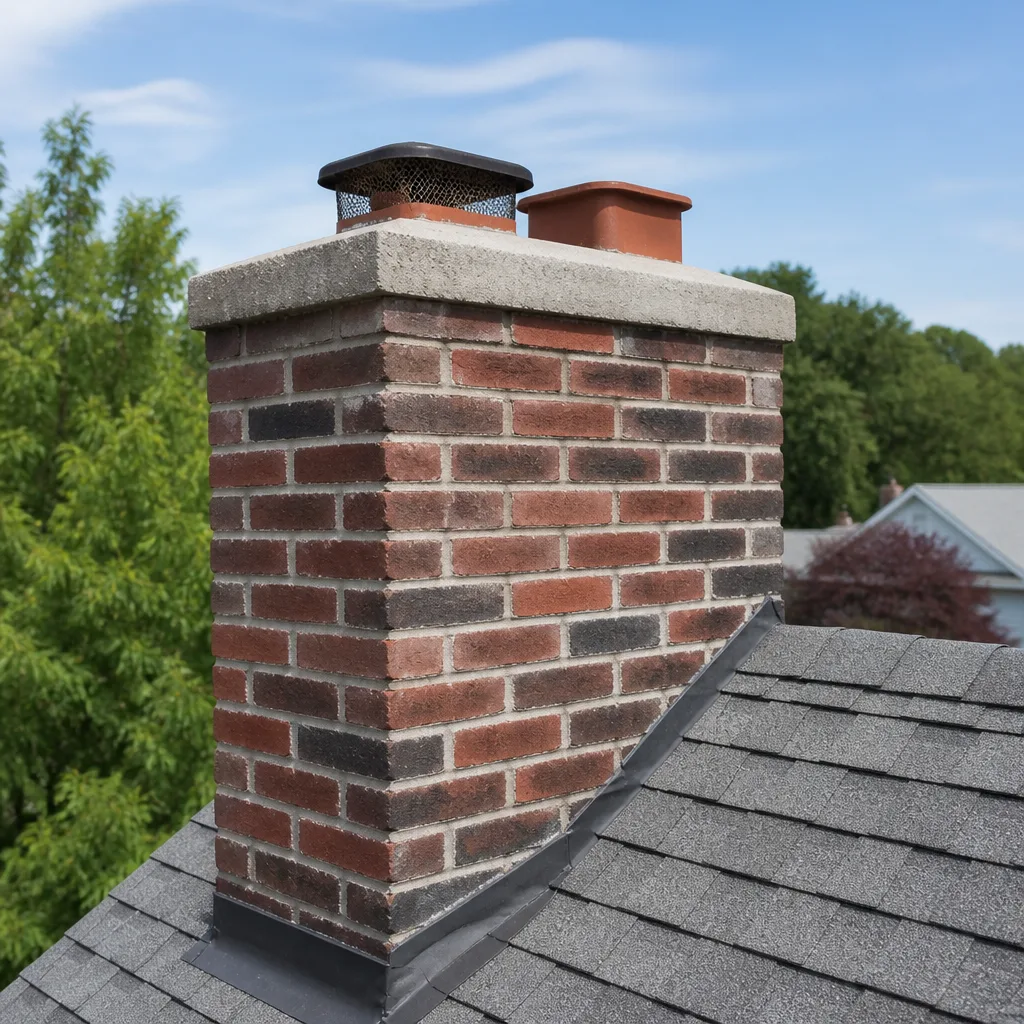
- Failed crown. The concrete cap at the very top of the chimney cracks and lets water run straight down the flue. This is the most frequent source we see on Costa Mesa chimneys, and it’s often solved with a properly sloped, sealed crown built from a Gelco or Copperfield system.
- Missing or loose cap. The metal or mesh assembly over the flue opening is the second most common entry point. A cap that’s rusted, bent, or absent lets rain inside and lets animals and debris in.
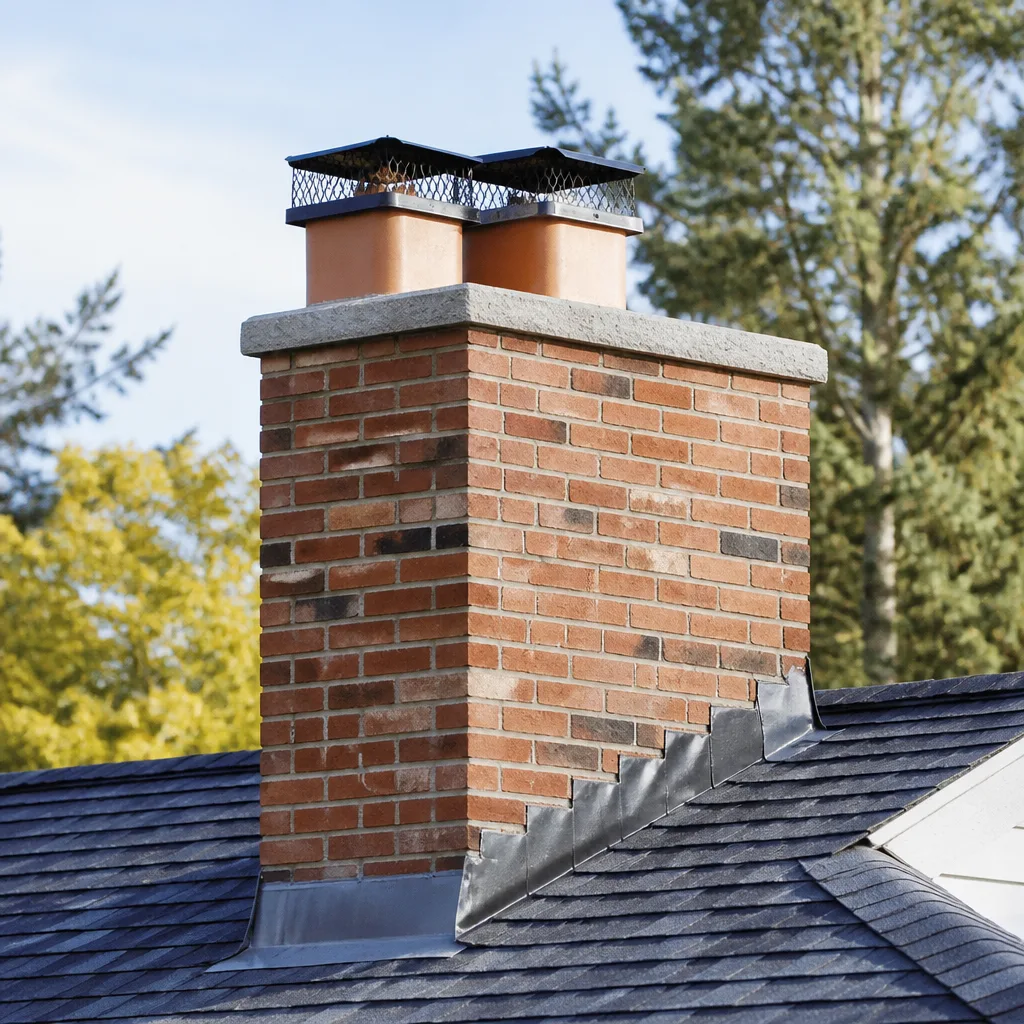
- Failed flashing or mortar joints. Where the chimney passes through the roof line, the metal flashing and the mortar between bricks can fail and let water in through the side rather than the top.
Here’s the part that matters most: efflorescence is the early, reversible signal. Spalling brick and crumbling mortar are the later, structural stage. If you see white bloom on the chimney exterior in Costa Mesa, get the crown and cap inspected before the next wet season, not after the brick starts to flake.
Reading a Flue Tile: Spalling Versus Ordinary Soot
When you look up the flue with a flashlight, you’ll see tile and residue. The trick is knowing which is which. Ordinary soot is a uniform black or grey coating that sits on the tile surface like powder. A damaged flue tile looks different: the surface is pitted, chipped, or flaking away from the tile in thin sheet-like pieces, and the tile may show a hairline crack you can trace with the light.
Here’s a simple way to tell them apart:
- Shine a strong flashlight up the flue with the damper open and the fire completely cold. Wait a minute for your eyes to adjust.
- Look for texture, not color. Soot is smooth or powdery. A cracked or spalling tile has sharp edges and visible cracks or missing surface.
- Check for gaps at the joints between tile sections. The mortar joints should be tight. Open joints, blackened edges, or white friable material between tiles are signs of the smoke chamber and flue gasket failing.
- Smell the flue without lighting anything. A fresh, damp-earth smell suggests moisture; a sharp creosote smell suggests heavy residue.
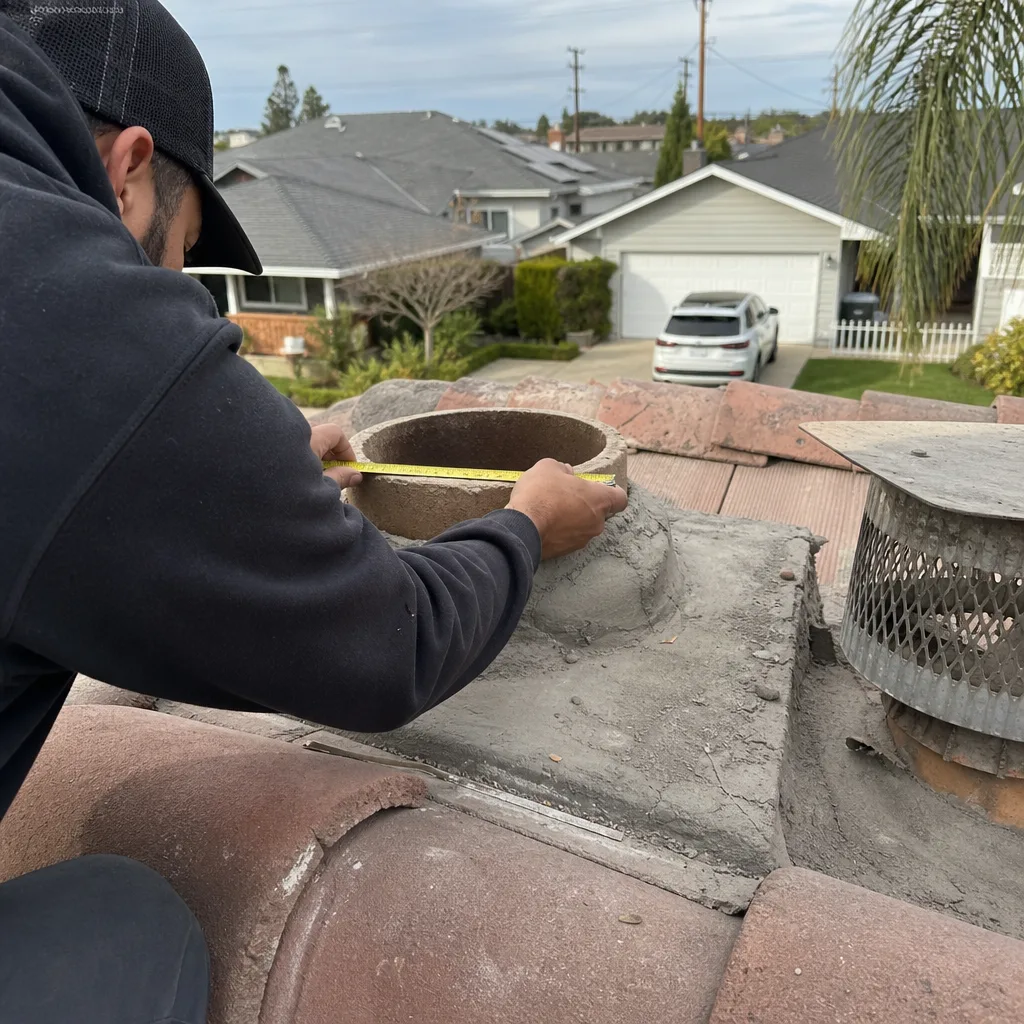
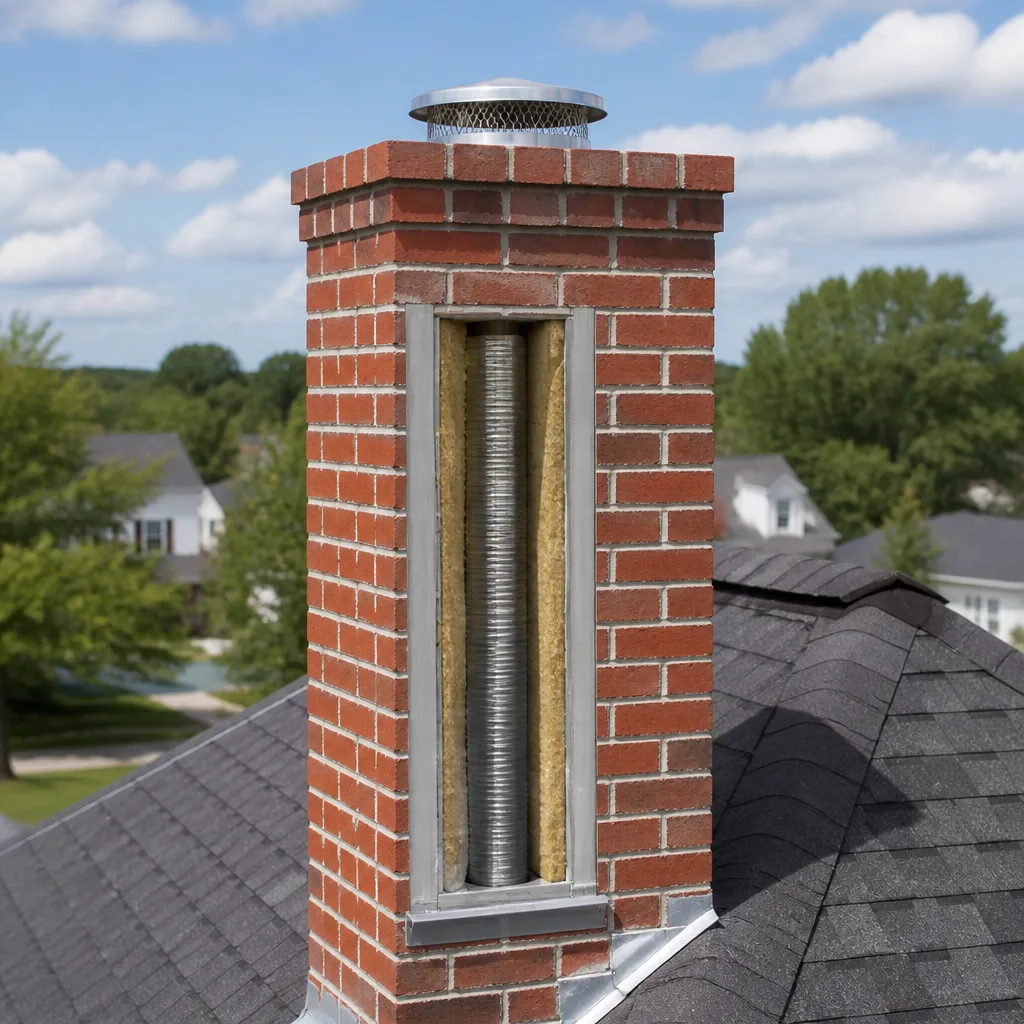
Spalling flue tiles are a real concern because they allow heat and gases to reach materials outside the flue. Where a tile has lost its surface and the crack runs through, the right fix is rarely a patch. Depending on the severity, we look at HeatShield resurfacing or a DuraFlex liner to restore the flue back to a solid, sealed passage without knocking the chimney down. Our technicians have up to 8 years of experience reading these signs, and any recommendation we make rests on what the camera shows, not on a guess.
Odor Diagnostics: Creosote, Gas Byproducts, and Moisture
A smell in the room with no fire burning is one of the most useful warning signs, because the type of smell points to a source. Learning to read them saves a lot of guesswork.
Creosote smell. Sharp, smoky, and tar-like, often strongest on a warm, humid day or when the outside air pressure shifts. It’s coming from residue inside the firebox, smoke chamber, or flue. This smell is usually a sign of stage 1 or stage 2 buildup and a sweep is the answer. If the smell turns acrid or gives you a headache when there’s no fire, stop using the fireplace and get it inspected.
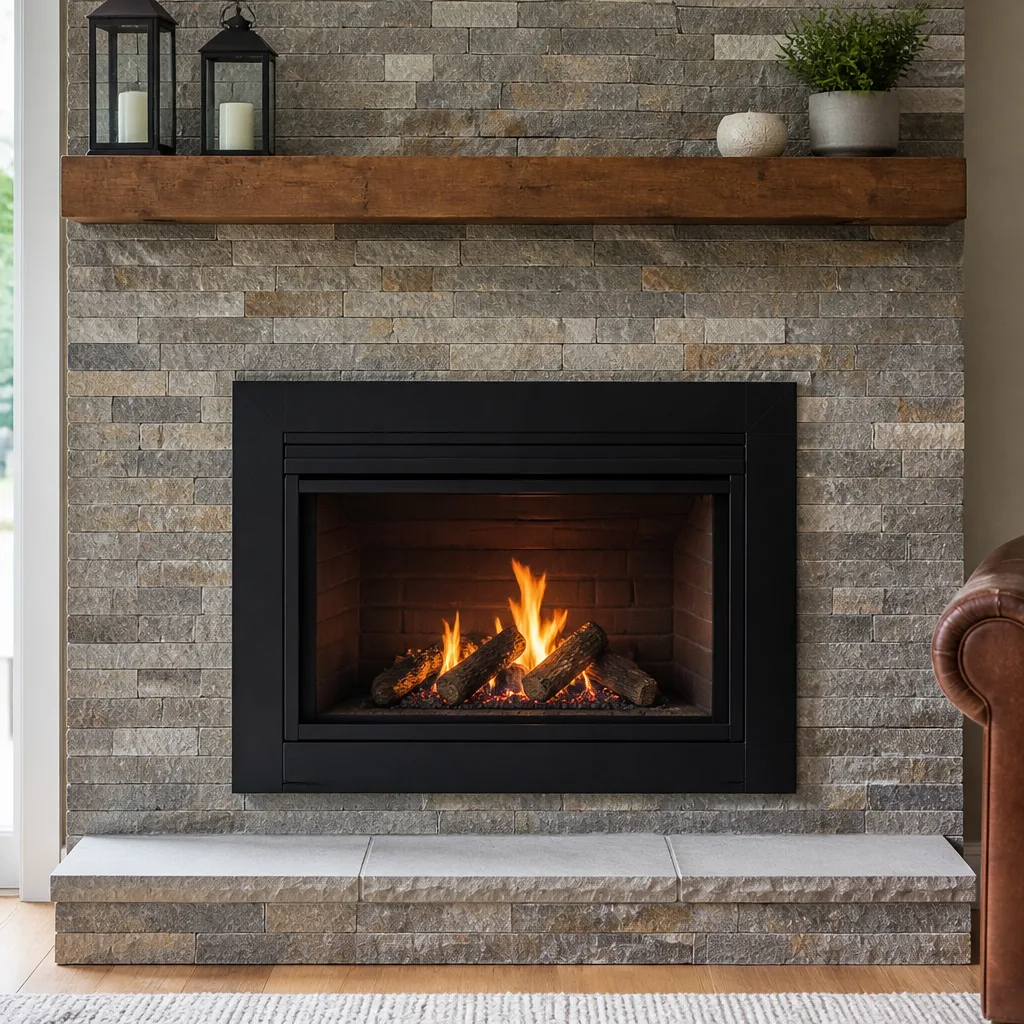
Gas byproduct odor. If you burn gas logs, an unusual smell in the room can be unburned gas or combustion byproducts venting back into the space. That’s a safety issue, not a cleaning issue, and needs to be checked immediately. It typically points to a blocked or disconnected vent, a wrongly sized flue for the appliance, or a cracked liner.
Moisture and mold smell. A damp, earthy, or mildew smell points to water intrusion. It’s usually tied to a failed crown, a missing cap, or a leak at the flashing. This is the smell that gets mistaken for a plumbing or crawlspace problem. In Costa Mesa homes, a musty smell near the fireplace that won’t go away after a sweep often means the crown and cap need attention, not the flue. We solve water problems at the source with Gelco, Olympia, and Famco cap and crown components matched to the flue, rather than spraying an air freshener over a leak.
Symptoms Mistaken for HVAC Problems
Several chimney problems look like HVAC problems at first glance. Homeowners call an HVAC technician, the technician adjusts the registers or replaces a filter, and the problem comes back the next time the fireplace is used. Here’s where the two get confused.
- Persistent smoke in the room. If a fire smokes into the room even with the damper open, it isn’t a house-pressure problem in most cases. It’s a chimney draft or flue sizing issue.
- Carbon monoxide detector trips. Any CO alarm with a fire burning or recently burning in the house needs to be treated as a chimney issue until proven otherwise. CO detectors don’t know where the gas came from, and a chimney is one of the most common sources in a home with a fireplace.
- Inconsistent draft. A fire that burns fine one evening and weakly the next, with no change in the wood, often points to a chimney that’s undersized for the appliance, partially blocked, or drawing against a negative pressure created by the HVAC system or a bath fan.
- A stuffy room and headaches. Poor ventilation out the flue, a closed damper, or a blocked cap can make the room feel thick. When that happens only when the fireplace is in use, the chimney is the place to look.
If your HVAC technician has already checked the system and the problem persists, a proper chimney inspection with a camera is the next step. In our experience helping Costa Mesa homeowners, a good camera inspection and a photo report can settle in one visit what a series of phone calls can’t.
Draft Problems and What Causes Them
Draft is the movement of air up the flue. When it’s weak or absent, smoke spills into the room and combustion products don’t leave. There are a handful of well-known causes, and most of them are visible or fixable.
- Blocked flue. Nests, leaves, or a collapsed tile can physically block the passage. This is the most common cause we find on aging chimneys and the reason a sweep comes with a visual inspection.
- Cold flue. A chimney that hasn’t been used in months is cold, and cold air sits in the flue. On a mild morning it takes a warm-up fire to establish draft, and a properly built fire from the start makes a big difference.
- Wrong flue size for the appliance. A flue that’s too large, too small, or square rather than round for the appliance draft poorly. This is where a liner matched to the appliance, such as a DuraFlex liner, fixes a problem a bigger firebox never will.
- House pressure. A tightly sealed house with bath fans or a range hood running can pull air down the chimney faster than it goes up. This is the one case where a home efficiency upgrade can make an old chimney misbehave.
- Failed smoke chamber. If the smoke chamber above the damper has lost mortar or its shape, the fire can’t turn smoothly from firebox to flue. That drives smoke into the room even with a clean flue.
Draft problems get worse over time, not better. If your Costa Mesa fireplace has smoked back into the room for more than a season, it needs to be inspected before the next burning season.
Cap and Crown Failures You Can Spot From the Ground
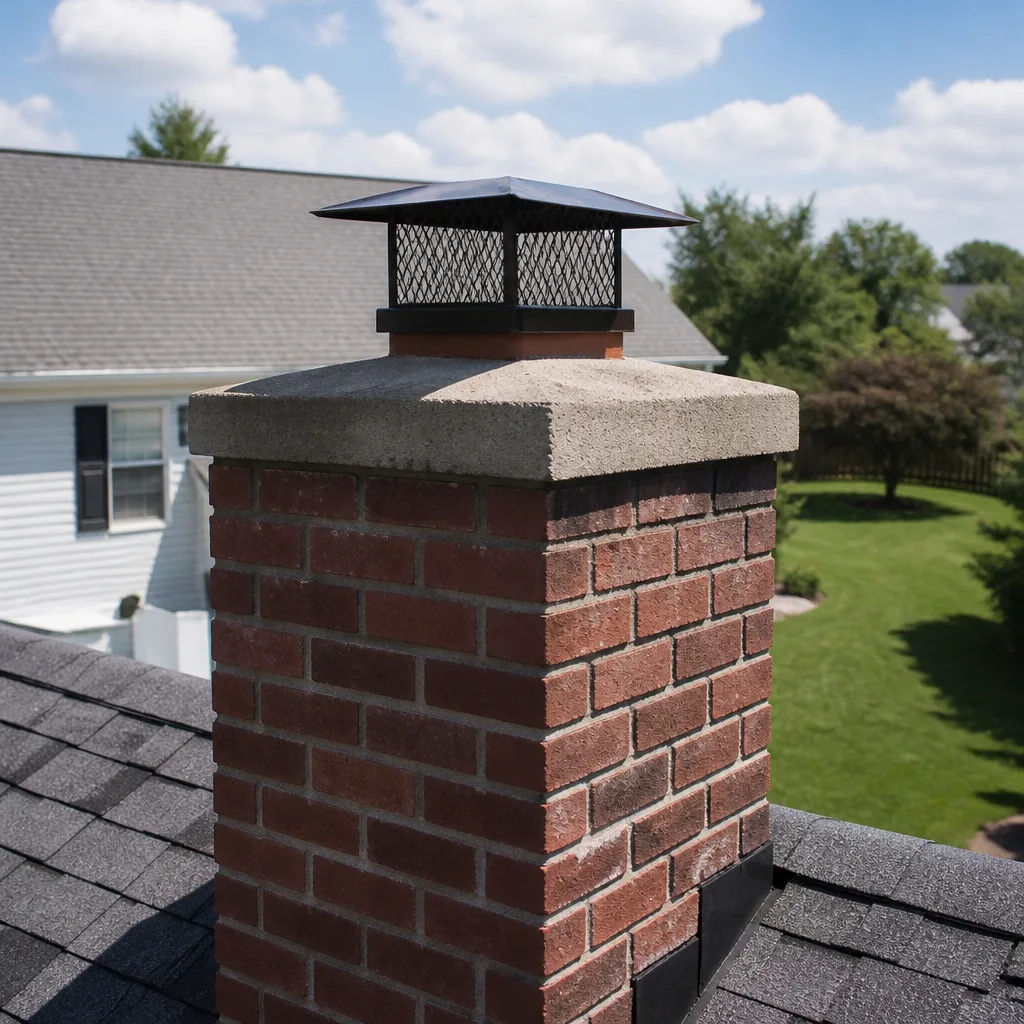
You don’t need to climb on the roof to spot the biggest water problems. Binoculars and a walk around the house will tell you a lot. A concrete crown that has visible cracks, a slope that looks flat or negative, loose debris on top of the crown, or a cap that’s rusted through or missing are all visible from the ground.
Here’s what those signs mean:
- Cracked or flat crown. The crown should slope away from the flue so water sheds off the sides. When it cracks or settles flat, water drains toward the flue, runs down the inside of the chimney, and starts the damage that shows up later as efflorescence and spalling.
- Rusted or missing cap. A cap is your chimney’s first line of protection. When it’s gone, rain, animals, and sparks all have a way in. The right cap is sized and matched to the flue, and we source from Gelco, Olympia, Famco, and Copperfield so the material fits the specific chimney rather than a general one-size option.
- Deteriorated mortar joints at the top. The top of the chimney takes the most moisture and sun. If the mortar looks crumbly or washed out at the top courses, it will only get worse with each wet season. Rebuilding the crown and repointing the top mortar is normal repair work, not just cleanup.
Cap and crown work is where a lot of “chimney cleaning” calls turn into real repairs. We build and install those repairs as part of the same chimney scope, so you’re not handed off to a separate masonry contractor for the fix.
How Often a Costa Mesa Chimney Needs Attention
There’s no single number that fits every chimney, but in our experience Costa Mesa’s mild climate gives us a useful pattern. Homes that burn wood regularly should be swept and inspected annually, the same rule the industry recommends for most wood-burning chimneys. Homes that burn only occasionally and use gas elsewhere might stretch to a couple of years between inspections, but they still need to be checked, especially because a chimney that sits idle can develop water and animal problems a clean flue would prevent.
There are two times a sweep matters most in Costa Mesa. The first is right before the burning season in cooler months, so the flue is clean and inspected before you rely on it. The second is right after heavy use, to catch stage 2 buildup before it glazes into stage 3. A routine sweep and inspection is the cheapest way to catch the warning signs this guide describes, and it lets you see the camera evidence for yourself before deciding on any repair.
If you haven’t had the chimney looked at in a couple of years and you use the fireplace regularly, that’s enough reason to book a sweep and inspection. Our chimney sweep pairs a flat-price sweep agreed before booking with a camera inspection and a photo report included, so you have the same view of the flue that we do.
Common Mistakes to Avoid
- Treating a smoke smell as a drafting quirk. If a room with no fire smells strongly of smoke, get it inspected. That smell usually means combustion gases are venting back into the room through a failed flue or smoke chamber.
- Burning wet or unseasoned wood to save money. Wet wood burns cooler and produces more creosote per fire, which is exactly how a stage 1 flue becomes stage 2 in a single season. Seasoned hardwood changes that math directly.
- Ignoring white staining on the exterior. Efflorescence is the visible sign that water is moving through the masonry. Once it becomes spalling brick or crumbling mortar, the repair is a structural job instead of a crown and cap job.
- Assuming the HVAC is the problem when it’s the chimney. Persistent smoke, a CO detector that trips, and inconsistent draft are classic chimney signals that get misdiagnosed as ventilation problems.
- Buying a cap or crown from a generalist or a supply house. A cap must be sized and matched to your flue and the crown must slope and seal correctly. Off-brand fittings are where most water intrusion from bad cap and crown work starts.
- Assuming a patch will fix a spalled flue tile. Once the tile surface is gone, a smear of patching compound usually fails with the next heating cycle. The right answer is resurfacing with HeatShield or a full liner, chosen from the camera findings, not from a catalog.
- Letting a professional clean without inspecting, or inspect without explaining. A sweep that doesn’t come with a look up the flue and photographs you can see is only half the job. In our experience, a clean look at the evidence is what separates a real service from an upsell.
See the difference
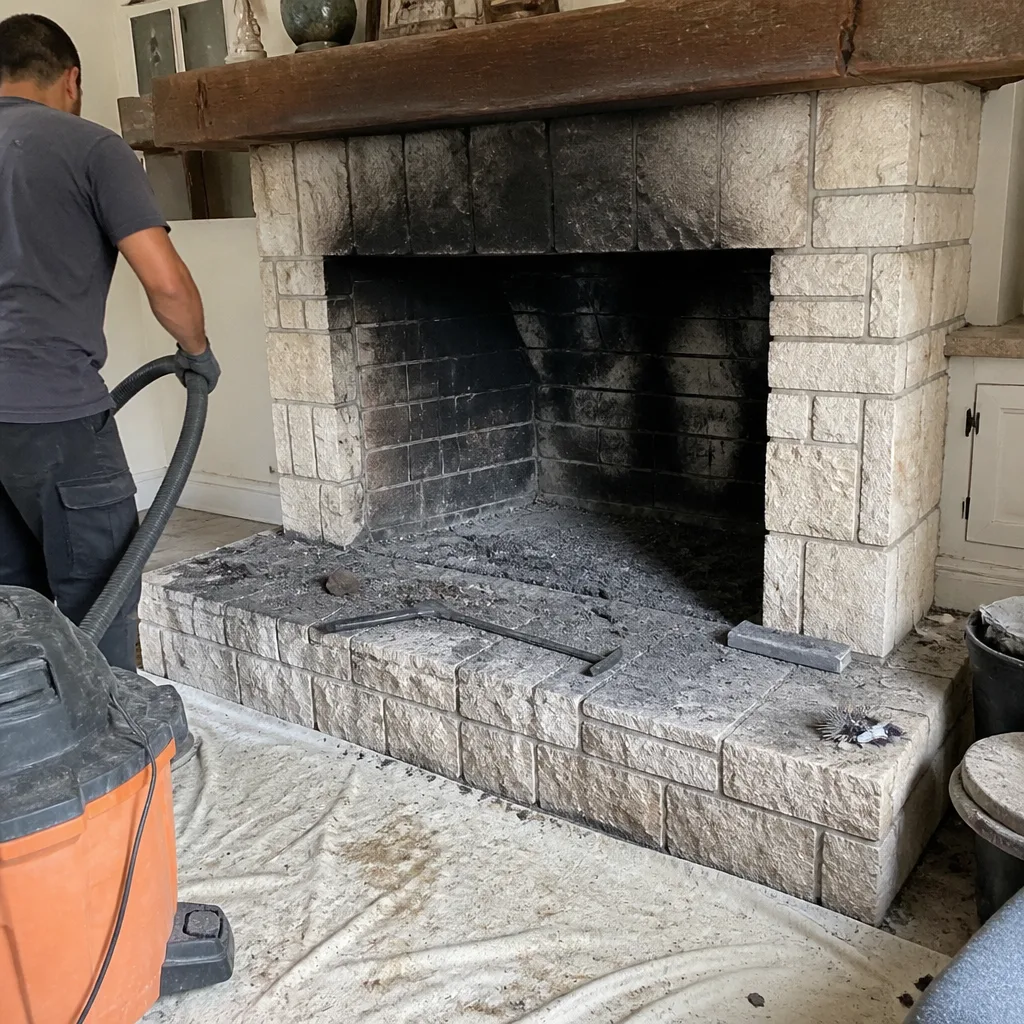 Before
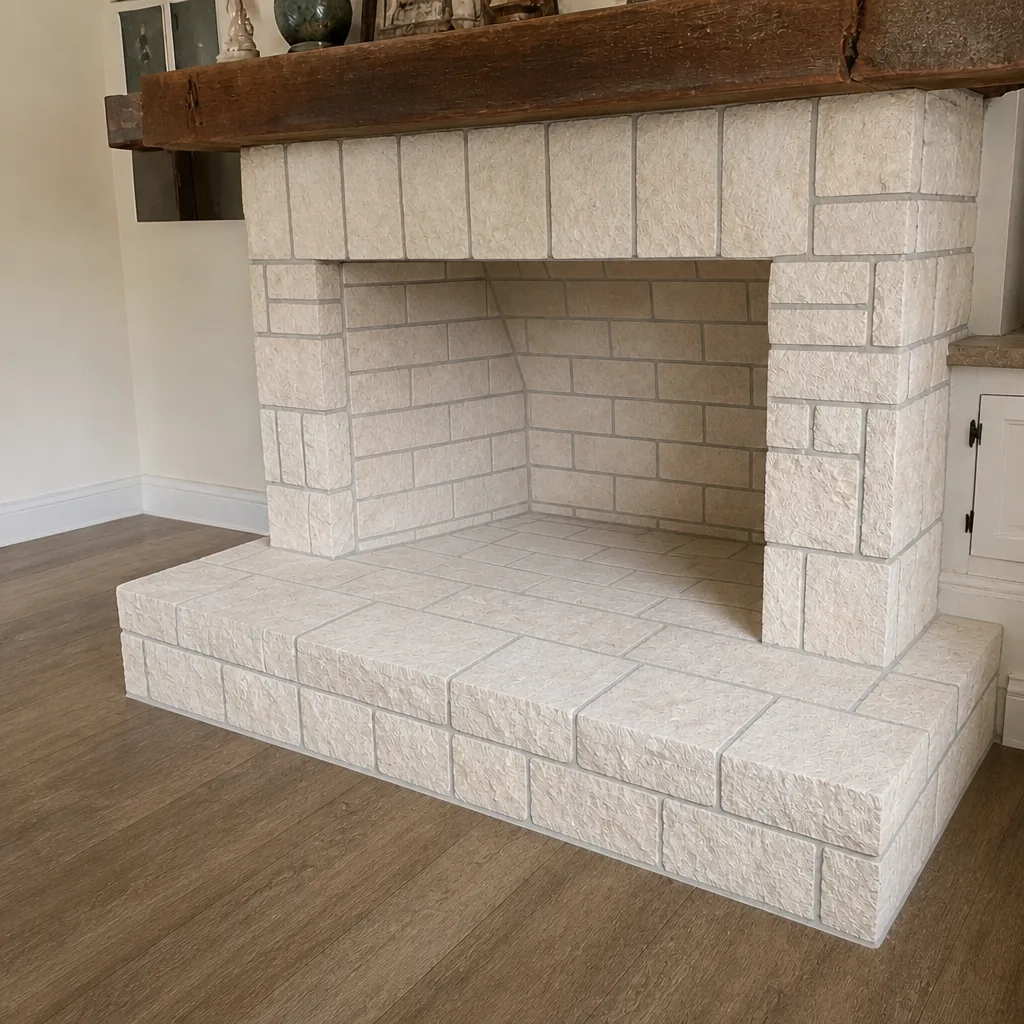 After
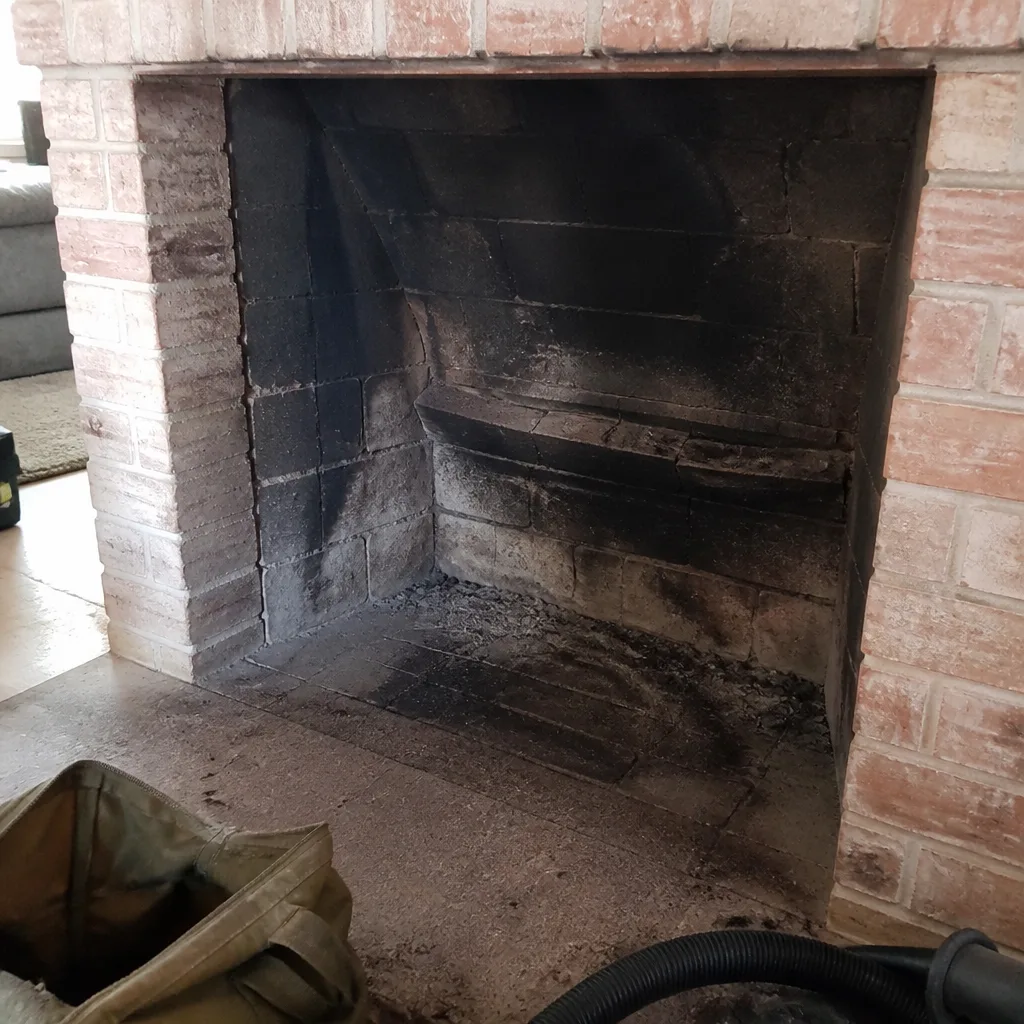 Before
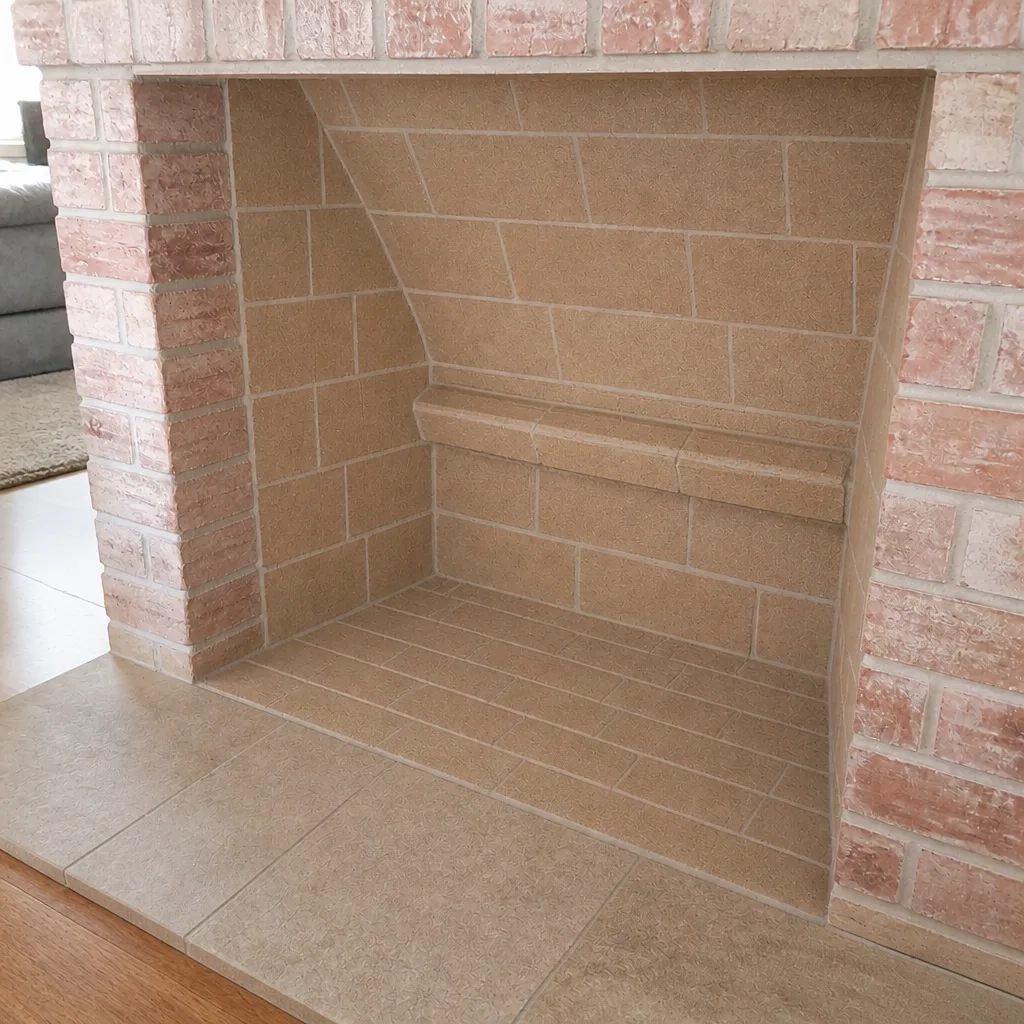 After
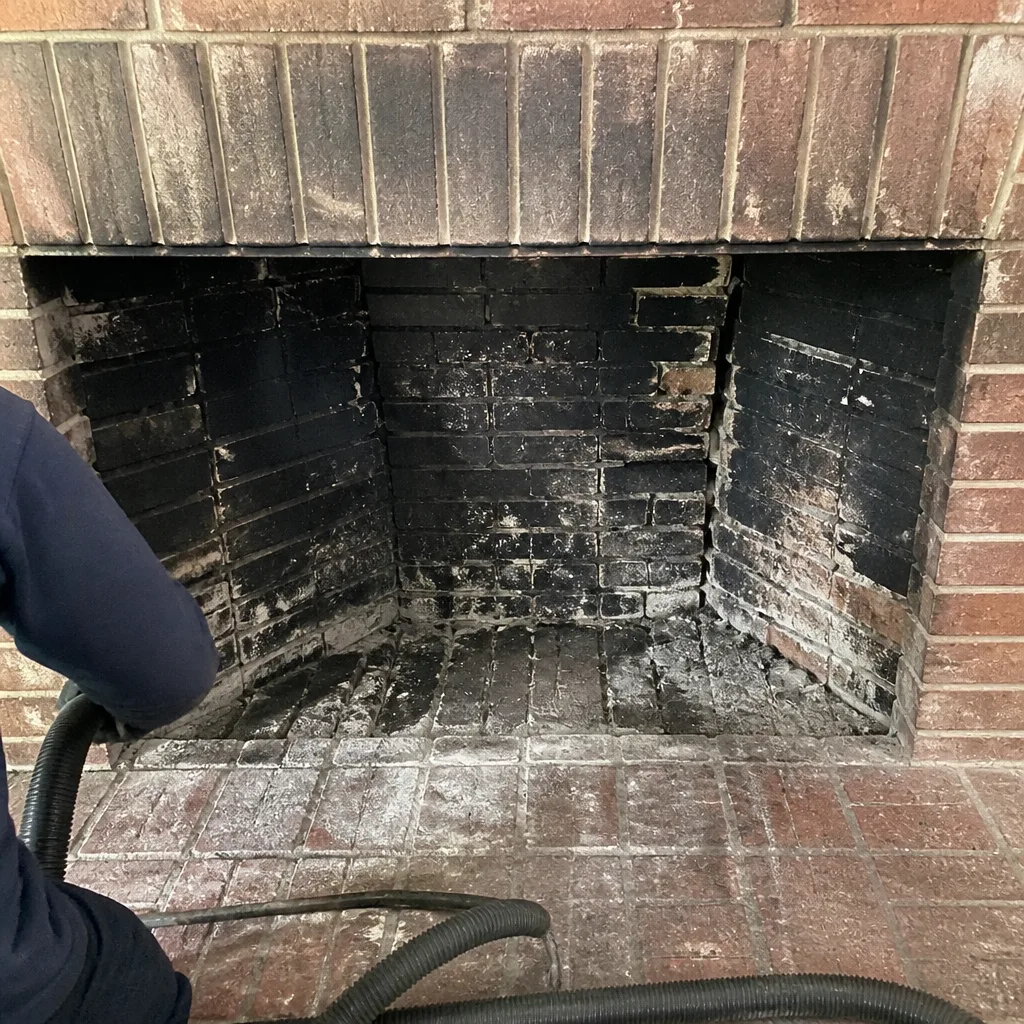 Before
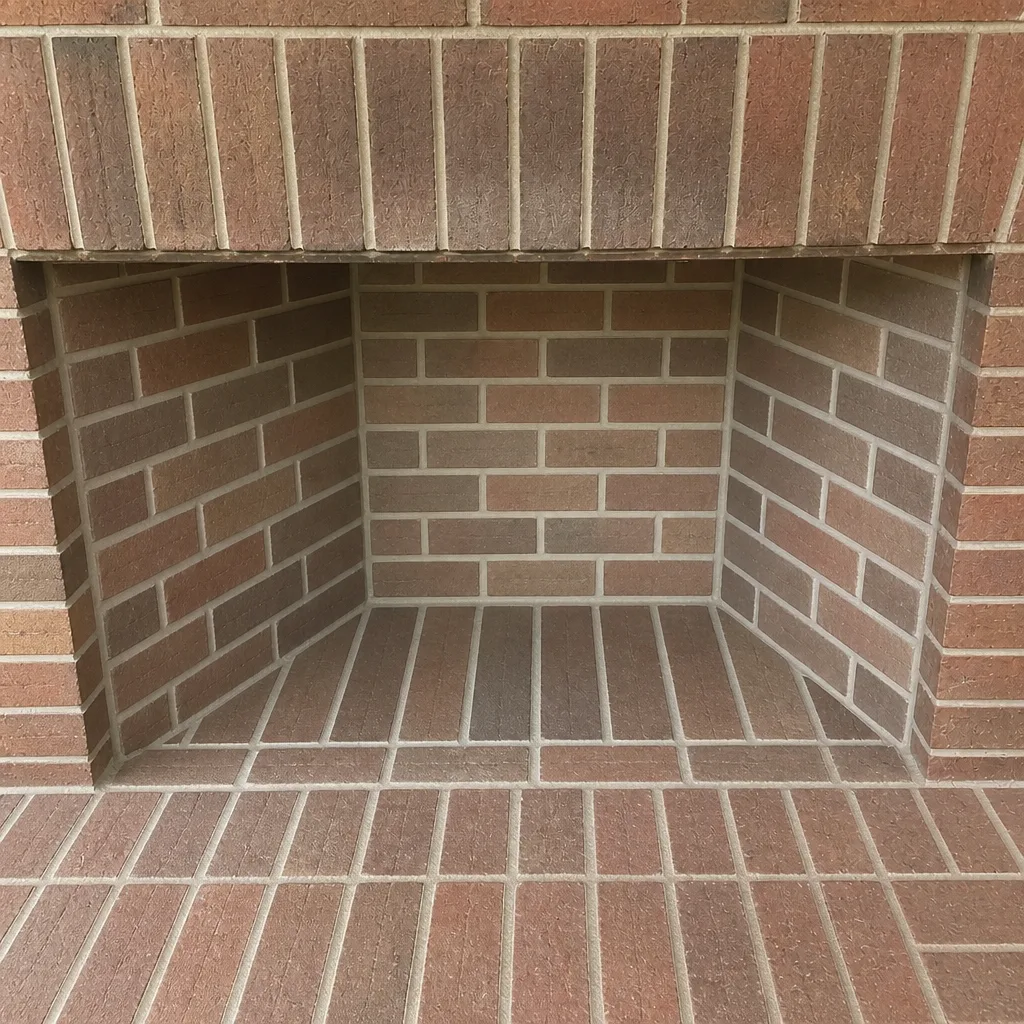 After
When to Call a Professional
Call a professional when you see stage 2 or stage 3 creosote, when you see white staining on the exterior masonry, when a flue tile looks cracked or flaking, when you smell smoke in the room with no fire, or when a carbon monoxide detector has tripped with a fire burning. Also call if your fire smokes into the room, if the cap or crown is visibly damaged from the ground, or if you can’t remember the last time the chimney was inspected. Some of what this guide describes can be confirmed from the ground or through the damper, but the flue and smoke chamber need a camera and the trained eye that goes with it.
Costa Mesa Chimney Sweep Pros offers free estimates in Costa Mesa. Our technicians have up to 8 years of experience in this trade, and inspections come with the repair capability to fix what they find on the same visit. Call (877) 792-5891 for a free estimate. We answer 24/7. Fast dispatch from 7am to 7pm, Sunday through Friday.
Frequently Asked Questions
If you can see a crusty or glazed layer on the flue walls, smell a strong creosote odor when no fire is burning, or it’s been more than a season of regular use since the last sweep, the chimney needs cleaning. A clean flue is not a guarantee of safety, though, so a sweep should always come with a visual inspection of the smoke chamber and flue tile. Call (877) 792-5891 for a free estimate on a sweep and inspection.
A smoky smell with no fire burning usually means creosote residue has built up inside the firebox, smoke chamber, or flue, and it’s most noticeable on warm or humid days when the pressure outside shifts. It can also point to a failed smoke chamber or a cracked flue tile venting combustion gases back into the room. Don’t burn another fire until it’s been inspected. Call (877) 792-5891 for a camera inspection and photo report.
White staining, called efflorescence, is the visible sign that water is moving through your masonry, and it’s serious enough to inspect before the next wet season. The usual sources are a cracked or flat crown, a missing cap, or failed flashing, and these are all fixable by building a properly sloped crown and fitting a cap matched to the flue. If the stain has progressed to flaking brick or crumbling mortar, the repair is structural. Call (877) 792-5891 for a free estimate.
Look for texture rather than color. Ordinary soot is a smooth or powdery coating on the tile, while a damaged tile is pitted, chipped, or flaking in thin sheets and may show a hairline crack or an open joint between tile sections. A flashlight up the flue from the damper with a cold fire is enough to spot the difference in many cases, but confirming the extent of the damage needs a camera inspection. Call (877) 792-5891 for a free estimate.
A routine sweep of light soot is the only part of chimney work that can be attempted by a homeowner, and even then, using the wrong brush on a tile flue can damage the surface. Anything beyond light soot, including stage 2 or stage 3 creosote, a spalled flue tile, a crown repair, or any work on a gas appliance, belongs to a trained chimney professional. High-tension and structural conditions are not a safe DIY job. Call (877) 792-5891 for a free estimate.
Skipping an inspection lets stage 2 creosote glaze into stage 3, which is the form most associated with chimney fires, and it lets a small crown or cap failure grow into a structural repair. It also means a cracked flue tile or failed smoke chamber can keep venting combustion gases into the home without you noticing until a detector trips. A sweep, camera inspection, and photo report cost far less than a rebuild. Call (877) 792-5891 for a free estimate.
The Bottom Line
The warning signs in this guide are not subtle once you know what you’re looking at. A smoky smell with no fire, a crusty or glazed flue, a chalky white stain on the exterior, a flaking flue tile, smoke in the room, or a CO detector that trips all point to a specific type of problem, and each one has a known fix. Costa Mesa’s mild winters give you a long window to inspect and repair before burning season. Use it. A routine Costa Mesa Chimney Sweep Pros sweep and camera inspection catches most of these signs early, and where repair is needed, our chimney repair and fireplace repair work uses named, warrantied materials: DuraFlex liners, HeatShield resurfacing, and Gelco, Olympia, Famco, and Copperfield cap and crown components.
Call (877) 792-5891 for a free estimate. We answer 24/7. Fast dispatch from 7am to 7pm, Sunday through Friday. Nothing is recommended without camera evidence you can see for yourself, and we’ll tell you plainly when a repair can safely wait.
Written by the team at Costa Mesa Chimney Sweep Pros.