
Emergency Chimney Sweep Near Me: What Costa Mesa Homeowners Should Do First
If you smell smoke backing into your living room and your first instinct is to search “emergency chimney sweep near me,” you’re skipping three steps that could make the difference between a soot cleanup and a structural fire. Most chimney emergencies in Costa Mesa don’t require an immediate sweep. They require the right sequence of actions in the first 30 minutes to stop things from getting worse. This piece gives you that protocol: what to do before the technician arrives, how to tell a real emergency from an urgent-but-manageable situation, and what to have ready when you call.
What Actually Counts as a Chimney Emergency?
A chimney emergency is any situation where fire, smoke, or toxic gas is actively moving into your living space or where the chimney structure is compromised right now. Heavy soot smell after the first fire of the season is a warning sign, not an emergency. The distinction matters because it tells you whether to call the fire department, book a sweep, or simply close the damper and wait for a scheduled visit. In our experience, homeowners tend to lump everything into the emergency bucket, which leads to panic calls for problems that can wait a few days and quiet acceptance of problems that can’t. Here’s how to sort them:
- True emergency (call 911 first): Visible flames or glowing embers outside the firebox, flames showing at the top of the chimney, smoke filling the room with no way to stop it, or the smell of burning building materials.
- Urgent, book a same-day visit: Active smoke rollback into the room when the damper is open, a live animal or bird in the flue with odor, or a damper that won’t close and leaves the house open to the cold.
- Not an emergency: A heavy soot smell after the first fire of the season, light creosote flaking in the firebox, or a damper that doesn’t seat perfectly but still blocks most of the flue.
If you’re in the second group, a chimney sweep visit that day is usually enough. If you’re in the first group, call 911. And if you’d rather not sort it yourself, call us at (877) 792-5891 and we’ll help you figure out which bucket you’re in.
The 5-Step Triage Protocol Before Anyone Arrives
Follow these five steps in order. The order matters more than the speed.
- Close the damper. This stops the flow of smoke from the flue into your living space. If the fire is still burning, don’t slam it shut on a hot fire; let the fire die down first, then close it once the smoke has thinned. If you can’t close it, leave the room and call.
- Ventilate the room. Open a window or door on the far side of the room from the fireplace. This creates a cross-draft that pulls smoke out instead of pushing it deeper into the house. Don’t open a window right next to the fireplace; that can feed the draft that’s already pushing smoke back at you.
- Check for active ember glow in the firebox. Look at the firebox walls, the damper, and the smoke shelf above the damper. Any glow outside the fire itself means heat is reaching places it shouldn’t. That’s a 911 call.
- Do not use water on a suspected flue fire. Water on a chimney fire can crack flue tiles, spall the firebox, and turn a contained problem into a structural repair. If you think the flue is on fire, close the damper, get everyone out, and call 911.
- Call. If you’re past step four and nothing is on fire, call us or a sweep company. Have the answers to the questions in the next section ready.
We’ve seen homeowners jump straight to step five and skip steps one through four. That’s the mistake. A closed damper and a cracked window buy you ten minutes that a phone call alone won’t.
When to Call 911 First, and What to Tell the Sweep Company When You Book
Call 911 first if you see flames or glowing embers outside the firebox, if smoke fills the room and won’t clear after you close the damper and ventilate, if you smell burning wood or plastic that isn’t coming from the fireplace, or if anyone in the house has a headache, nausea, or dizziness that started while the fire was burning. Those are signs of a chimney fire or carbon monoxide exposure, and they need the fire department, not a sweep.
If none of those apply, call us. When you book, the more specific you are, the better equipped the technician arrives:
- What you saw: smoke rollback, soot falling, water stains, a smell, an animal sound.
- When it started: first fire of the season, after a rainstorm, mid-burn, right after a sweep.
- Whether the damper opens, closes, or is stuck.
- The type of fireplace: masonry, prefab, insert, or freestanding stove.
- Anything you’ve already done: closed the damper, opened windows, used a fire extinguisher.
That last item matters more than people think. A fire extinguisher discharge inside a firebox leaves a residue that changes how a technician approaches the cleaning, and it’s information we need before we knock on the door.
What a Same-Day Sweep Can and Can’t Fix
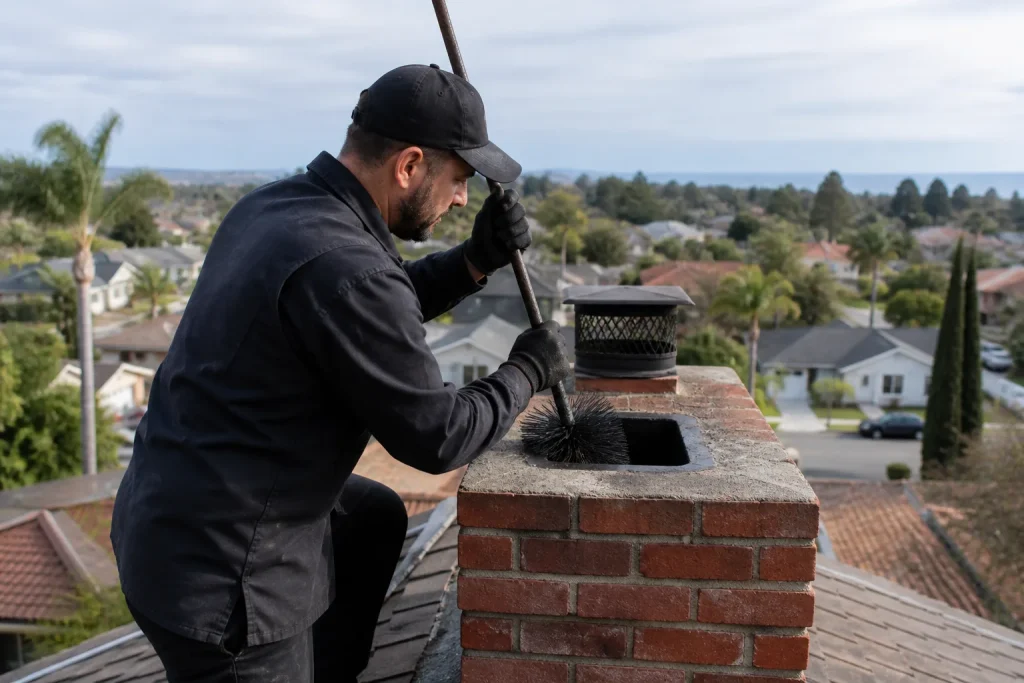
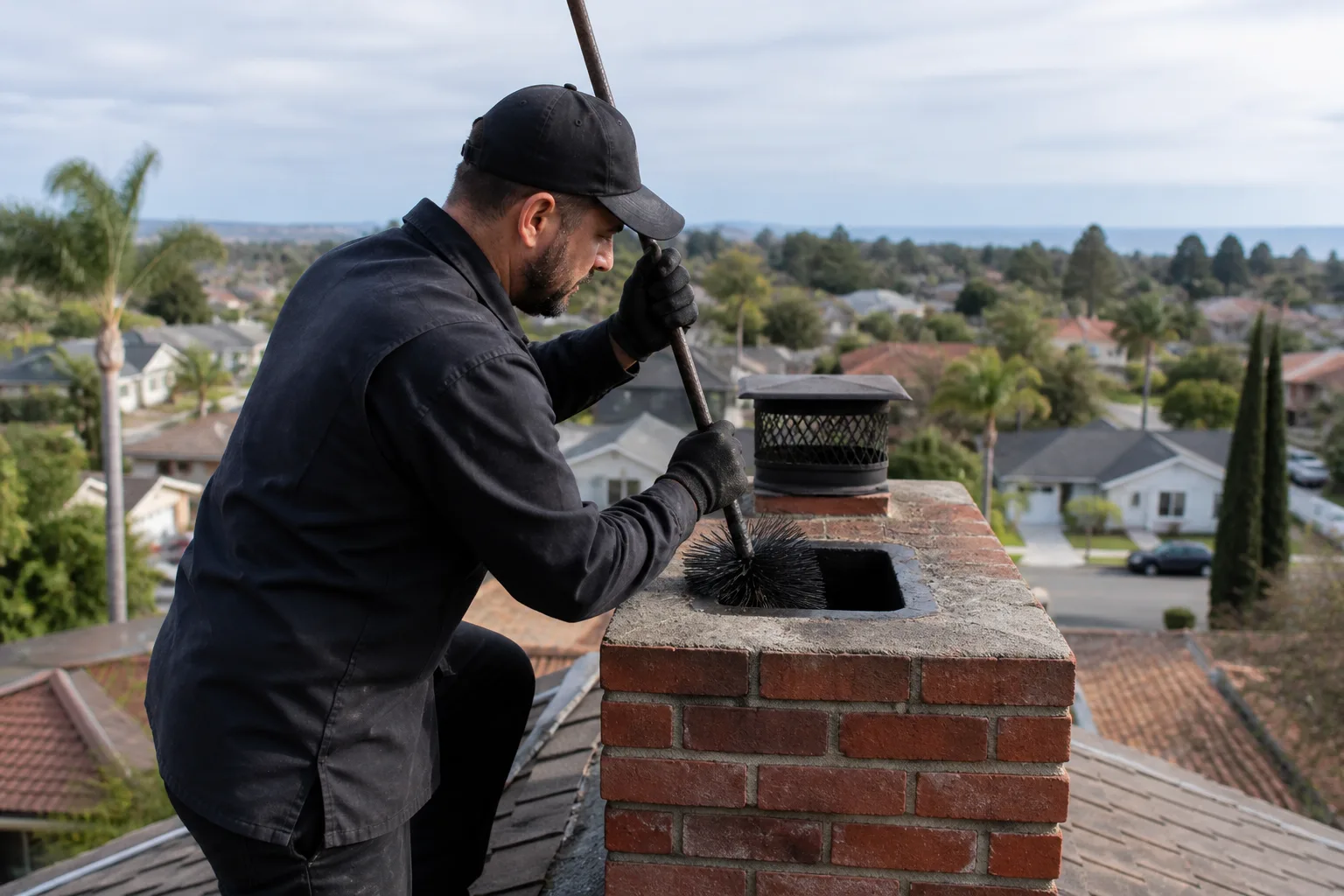
A same-day sweep can clear a blockage, remove soot and creosote from the flue, inspect the firebox and damper, and tell you what’s actually wrong. That’s the job. It cannot reline a flue, rebuild a crown, or replace a cracked firebox tile on the same visit. Those are structural repairs, and they need their own appointment and their own written estimate. This is the part most homeowners don’t hear until after the sweep is done, and it’s worth knowing before you book.
When a technician finds a cracked flue tile, a spalled firebox, or a damaged crown, the repair scope is set by what the inspection shows. That’s where our materials matter. We use HeatShield for flue resurfacing, which restores a flue without a full reline or rebuild in the right conditions. If a full liner is needed, DuraFlex is the liner we install. If the crown or cap needs replacement, we source from Gelco and Olympia Chimney so the fit matches your chimney’s actual configuration rather than a one-size part. Those names mean something to an insurance adjuster and to the next inspector who looks at your chimney.
One more thing worth saying plainly: nothing gets recommended without camera evidence you can see for yourself. If a tech tells you the flue needs a reline, ask to see the camera footage. If the flue can safely wait until spring, we’ll tell you that too. We’d rather send you away with a note than sell you a liner you don’t need.
What to Have Ready When the Technician Arrives
Gather three things and the visit runs faster. First, your last inspection report, if you have one. It tells the technician what the previous sweep saw, which is faster than starting from scratch. Second, any recent fireplace use notes: when you last burned, how long, whether you noticed a smell or smoke at the time. A short note on your phone works. Third, if you have a homeowner’s insurance policy that covers chimney damage, pull out the relevant section so the technician can document the visit in the terms your adjuster will ask for.
Documentation matters if a claim follows. An inspection report with photos, the scope of work, and the materials used is what an adjuster needs. Vague receipts and verbal descriptions slow claims down. Photos taken before the visit help too: cracks, stains, or debris are easier to document before the technician moves anything.
When to Call a Pro
Call a pro when you smell smoke indoors after the damper is closed, when soot is falling into the firebox, when the damper won’t seat, or when it’s been more than a season since the last sweep. Call us sooner if there’s a live animal in the flue with an odor, or if the first fire of the season pushed smoke into the room. For structural concerns you’ve already spotted, a chimney repair visit is the right booking. If the firebox itself is cracked or the mortar is failing, that’s fireplace repair. One company handles the sweep, spots the problem, and fixes it, so you’re not handed off to a second contractor who has to start over.
Related services in Costa Mesa: routine sweeps, inspections, fireplace repair, chimney repair, and cap and crown work, all under one roof.
The Bottom Line
Most chimney emergencies in Costa Mesa need a sequence before they need a sweep. Close the damper, ventilate the room, check the firebox for glow, skip the water, then call. Call 911 first if there’s fire outside the firebox or signs of carbon monoxide. Otherwise, book a sweep and have your last inspection report and recent use notes ready. If you’re in Costa Mesa and need help, the team at Costa Mesa Chimney Sweep Pros offers free estimates. Call (877) 792-5891. We answer 24/7. Fast dispatch from 7am to 7pm, Sunday through Friday.
Frequently Asked Questions
Pricing is set per job by a written estimate after the technician sees the chimney, and the estimate itself is free. We don’t publish a flat rate because a soot cleanup and a blocked flue with animal debris aren’t the same job. Call (877) 792-5891 for an estimate.
You need a new liner when the camera footage shows a cracked, spalled, or missing flue tile, or a gap in a prefab liner, and you should ask to see that footage yourself. If the flue is sound, resurfacing with HeatShield may restore it without a full replacement, and sometimes the right answer is no work at all this season. Call us for an inspection you can verify.
Creosote builds up inside the flue with every fire, and at a certain thickness it can ignite. A chimney fire can crack flue tiles, spread to the surrounding framing, and push smoke and carbon monoxide into the house. If the first fire of the season rolled smoke into the room, that’s a sign the flue is restricted and shouldn’t be used again until it’s swept.
No. A sweep clears soot and finds the problem, but structural repairs like relining, resurfacing, and crown rebuilding need their own appointment and estimate. A same-day visit tells you exactly what’s wrong and what it takes to fix it. Call us today.
Written by the team at Costa Mesa Chimney Sweep Pros.
Need Chimney Cleaning Help?
Call Costa Mesa Chimney Sweep Pros - the local pro we connect you with is licensed and insured, here with fast help in Costa Mesa.
(877) 792-5891